


Why do Northeast Indians have to Prove They’re Indian?
India is often described as a land where many different languages, ethnicities, religions, and groups live together. We celebrate this diversity in our songs, food, films, and festivals. However, for many people from Northeast India, even though we are part of this diverse nation, we still frequently face one question: "Where exactly are you from?" This question might seem trivial, but the word "exactly" changes everything. An answer like "Mizoram," "Manipur," or "Nagaland" often seems to be treated only as a starting point. Because being from the Northeast does not fit their preconceived notion of what an Indian should look like, they assume there must be somewhere else behind it. Students coming from this region have spoken out about being asked if they are Chinese, being told to "learn Hindi," and being treated like foreigners because of their appearance, language, and the way they speak.
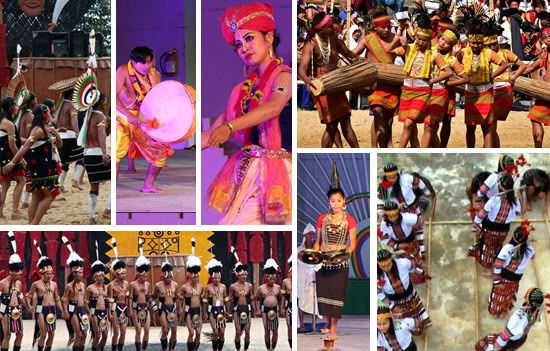
When we look at how India honors people from the Northeast, it is hard to overlook this contradiction. Zubeen Garg is not just a singer from Assam; he is a songwriter who transcends various languages and cultures, and his identity is deeply intertwined with Assam and the entire Northeast. His songs have become a part of the hearts and lifestyles of the people in this region. Mary Kom has also represented India in global sports. We proudly celebrate their achievements as a part of India's history. However, what happens when those same people from the Northeast step out of the worlds of sports and music and enter the daily lives of Indians? Why is it that a person can be Indian enough to represent the nation, yet still constantly face questions about whether they truly belong here?
Such things become even more unpleasant when meaningless stereotypes enter the daily lives of ordinary people. Wanting to take pictures because someone is different, mocking the way they speak, calling them names related to their food, drink, or appearance, or treating them differently in shops may seem like trivial occurrences. However, when it happens frequently, it grows into something more: the Northeast often becomes a spectacle rather than a place people try to understand. The desire to know someone better is not wrong. The wrong begins when a person is assumed to be a foreigner before even knowing that they are Indian.

Recent events have made it harder to dismiss such thoughts. In December 2025, Anjel Chakma, a student from Tripura, died after being assaulted in Dehradun. His family and others alleged that racial slurs were used, but the police stated in their initial investigation that there was no evidence to suggest it was a racially motivated incident. Later, a chargesheet was filed against six individuals. This debate over the cause and circumstances clearly highlights that issues of racial discrimination should not be dismissed, but rather investigated promptly.
Recently, in September 2026, the killing of 55-year-old Manipuri singer Chongtham Vikram Singh in South Delhi had a significant impact on people from the Northeast. It is said that Singh was beaten by a group of people after he complained about the noise they were making in front of his house; seven people were arrested, including one minor. The police have not yet confirmed that this incident was motivated by racial discrimination. However, following his death, the Delhi Police announced that they intend to increase patrolling in areas with a high population of people from the Northeast.
These incidents do not mean that all violence against people from the Northeast is automatically racial discrimination. However, they serve as a reminder of why the issues frequently faced by people from the Northeast should be taken seriously. Making jokes about people's eyes, holding misconceptions about their region, or demanding that they speak Hindi may seem like trivial matters when viewed individually.
But for those who experience them repeatedly, these things can serve as a reminder that their identity is being measured against how others define an "Indian.” India may not need to be reminded that the Northeast exists. It needs to realize that the Northeast has always been an integral part of India—not as a strange land to be discovered, but as a place home to various communities, each with their own languages, histories, and identities. No one should have to prove their Indianness through medals, songs, passports, Hindi phrases, or by explaining where their state is located on a map.

Comments